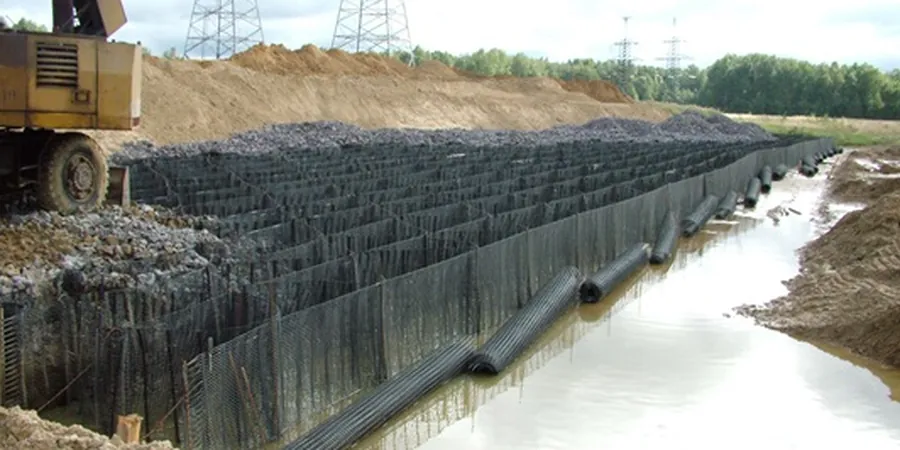
Many contractors in Anaheim assume a simple gravel base will handle heavy loads on soft ground. That assumption fails when the subgrade is silty or the water table rises. Geocell design solves this by creating a three-dimensional confinement system that distributes vertical stress across a wider area. Without proper design, the cells can rupture or the fill can migrate. We start by classifying the on-site material using ASTM D2487. Then we run a plate load test to measure the actual subgrade modulus. That data drives the cell height, infill type, and connection pattern. No guesswork.
Geocell design in Anaheim must account for seismic site class D soils and seasonal water table fluctuations to prevent lateral spreading.
Method and coverage
Anaheim grew fast after the 1950s, pushing development onto former agricultural land with soft alluvial deposits. That legacy means many sites need Improvement before they can support parking lots, access roads, or storage yards. Geocell design in Anaheim typically handles two scenarios: unpaved roads on low CBR subgrades and slope erosion protection. We match the cell polymer to the expected UV exposure and chemical contact. For heavy truck traffic we specify a higher-density polyethylene and a thicker cell wall. We also verify the anchor system with a direct shear test on the interface between cell and subgrade. That prevents the whole mattress from sliding under braking loads.
Technical reference image — Anaheim
Regional considerations
Anaheim sits within the southern California seismic zone, where peak ground accelerations can exceed 0.4g. The predominant soils are silty sands and low-plasticity clays from the Santa Ana River floodplain. When saturated, these soils lose strength quickly. A geocell mattress that is not designed for seismic lateral loads can tear at the seams during an earthquake. We run a limit-equilibrium check for each slope application using the actual cell-to-soil interface friction from our laboratory tests. That friction value comes from a modified direct shear setup that replicates field confinement. We also check for uplift under the water table if the site is within 3 ft of the seasonal high.
Traffic load analysis using AASHTO R50. We determine cell height, infill gradation, and base thickness to prevent rutting on low-CBR subgrades.
02
Slope Erosion Protection
Hydraulic stability analysis for channels and embankments. We size the cells to withstand shear stress from stormwater flow up to 6 ft/s.
03
Retaining Wall Reinforcement
Geocell-faced walls for steep slopes up to 70 degrees. We check external stability per FHWA guidelines and internal connection strength.
04
Load Support for Storage Yards
Wheel-load distribution for forklifts and container handlers. We model repetitive traffic and set the cell depth to keep differential settlement under 25 mm.
How does geocell design differ from a standard granular base?
A standard base relies on aggregate interlock alone. Geocell confinement adds a three-dimensional tensile restraint that prevents lateral spreading of the fill. This allows a thinner base section and reduces the imported aggregate volume by 30 to 50 percent on soft subgrades.
What is the typical cost range for a geocell design in Anaheim?
The design and material specification typically falls between US$930 and US$2,490 for a standard parking lot or access road. The final cost depends on cell height, polymer grade, and the number of seams required. We provide a firm quote after reviewing the soil report and traffic loads.
Can geocells be used on slopes steeper than 1H:1V?
Yes, but the design must include a positive anchorage system at the crest and toe. We calculate the sliding force from the soil weight and live load, then verify that the anchor spacing and embedment length provide a factor of safety of at least 1.5 per ASCE 7.
How long does a geocell installation last in Anaheim's climate?
With proper UV stabilization and infill cover, the service life exceeds 20 years. The main risk is mechanical damage from sharp aggregate during installation. We specify a non-woven geotextile separator below the cells to protect them from puncture by angular subgrade particles.