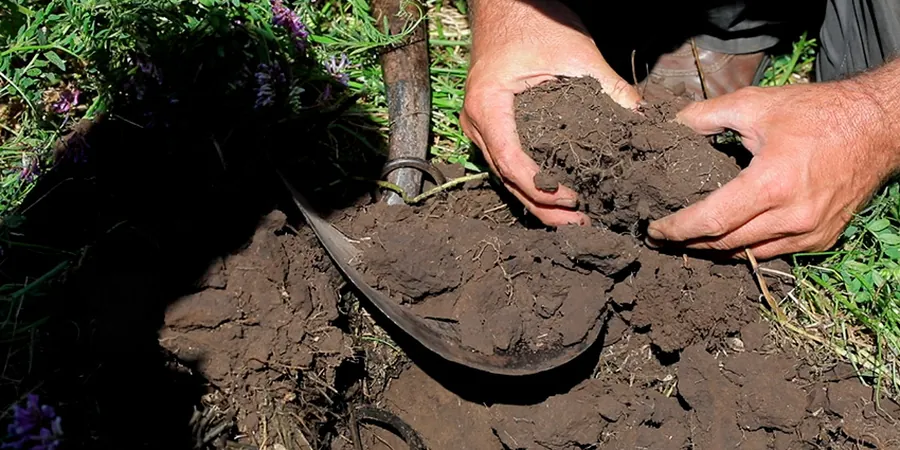
We bring a track-mounted excavator with a smooth-bucket to each site in Anaheim. That machine lets us dig test pits cleanly through the organic horizon — the dark, fibrous top layer that can reach 4 feet in parts of the Santa Ana River floodplain. Once we expose the profile, our crew logs the soil color, odor, and texture on the spot. We then collect bulk samples for laboratory loss-on-ignition testing. This physical approach gives us a direct read on the organic content before any foundation design begins. For deeper zones, we pair the pit with a [MASW survey](/masw-vs30/) to map the boundary between organic and mineral layers without extra drilling.
Organic content above 20 percent by weight requires removal or treatment before any structural load can be placed on the soil.
Method and coverage
What we see most in Anaheim is a thin cap of sandy loam overlying dark, spongy organic silt. That silt is the legacy of historic wetlands. It compresses easily and decays slowly. Our lab runs ASTM D2974 to measure organic content by ignition. Values above 20 percent by weight trigger special foundation measures. We also perform Atterberg limits on the mineral fraction below the organic zone. The plastic limit often drops below 15 in these layers, which tells us the base soil is lean and non-expansive. That is good news for bearing capacity once the organic material is removed or treated. We cross-check these results with a Proctor compaction test on the underlying fill candidates to confirm they can reach 95 percent of maximum dry density.
Technical reference image — Anaheim
Regional considerations
The difference between a site near the Anaheim Convention Center and one along La Palma Avenue is striking. Downtown, the organic layer is thin and patchy. Out toward the old citrus groves, the peat can be 2 meters thick. Building on that without management means long-term differential settlement. We have seen floor slabs crack and retaining walls tilt within two years. The risk is real. That is why we always run a consolidation test on organic samples before recommending over-excavation or lightweight fill.
How deep do organic soils typically extend in Anaheim?
In the central area near the stadium, organic layers are usually 0.6 to 1.2 meters deep. Along the Santa Ana River corridor, they can reach 2.5 meters. We confirm depth with test pits and hand augers before any design work.
Can I build directly on organic soil without treatment?
Not for structural loads. Organic soil compresses under load and continues to decay, causing long-term settlement. The IBC requires removal or treatment when organic content exceeds 20 percent. For light landscaping or pavement, a geotextile separation layer may be acceptable.
How much does organic soil management cost in Anaheim?
Cost depends on the depth of organic material, the volume of excavation, and the disposal fees at local landfills. For a typical 2,000 sq ft residential lot, expect between US$900 and US$2,250 for testing and limited removal. Full deep removal on a commercial site runs higher. We provide a fixed-price quote after the test pit results.
Location and service area
We serve projects across Anaheim and surrounding areas.