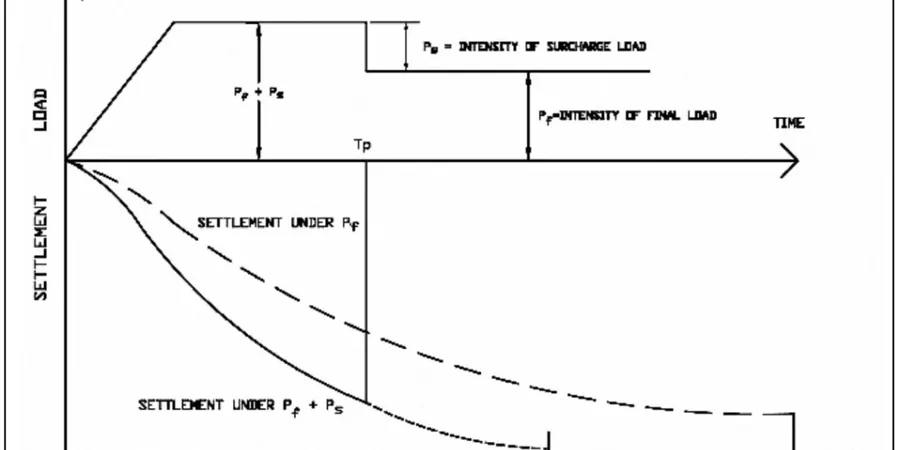
We mobilize a fleet of dump trucks and compactors to place staged fill lifts across your site in Anaheim. The process starts by spreading granular material in controlled layers, each one compacted to a specified density. Our survey crew installs settlement plates and piezometers before any load goes on. The surcharge height is calculated based on the target post-construction settlement and the time available. For deeper soft layers we often combine preloading with vertical drains to speed up consolidation. Anaheim sits on alluvial deposits that can reach 30 meters deep, so the design must account for variable compressibility across the site. Before placing the fill we run a resistivity survey to map the stratigraphy and locate pockets of organic silt that could cause differential settlement later.
In Anaheim’s alluvial soils, the surcharge height and drainage path control 80 percent of the consolidation rate.
Method and coverage
What we see often in Anaheim is that the subsurface profile changes within a single block. One borehole might show stiff sand and gravel, while 50 meters away you hit soft clay with high moisture content. For preloading with surcharge design, that variability means we have to instrument each zone independently. The key parameters are the coefficient of consolidation (Cv) from oedometer tests and the preconsolidation pressure (Pc). We use those values to model the time-rate of settlement and determine how long the surcharge needs to stay in place. In many projects we work with a surcharge ratio of 1.2 to 1.5 times the design load. The monitoring phase is critical — we track pore pressure dissipation and surface heave weekly. When the measured settlement curve matches the predicted one, we schedule the removal and let the foundation team start work.
Technical reference image — Anaheim
Regional considerations
The difference between Anaheim’s older alluvial terraces near the Santa Ana River and the younger floodplain deposits west of Harbor Boulevard is striking. On the river terraces you find dense sands with SPT N-values above 30, while the floodplain clays can have N-values below 5 with high plasticity. If you apply a uniform surcharge design across both zones, the settlement under the clay areas will be excessive and uneven. We always split the site into geotechnical zones and assign separate surcharge heights and monitoring plans to each. That approach saved a recent warehouse project near Disneyland from a 150 mm differential settlement that would have cracked the slab.
Installation of settlement plates, pneumatic piezometers, and inclinometers. Weekly data collection with automated dataloggers. Reports include time-settlement curves and pore pressure dissipation rates.
02
Vertical drain design and installation
Design of prefabricated vertical drain (PVD) spacing and depth for accelerated consolidation. We work with local installers experienced in the alluvial soils around Anaheim.
This service complements our laboratory testing work for a complete project analysis.
Standards that apply
ASCE 7-22 (minimum design loads), IBC 2021 (Chapter 18 — soil investigation and foundation), ASTM D2435 (oedometer test for consolidation properties), ASTM D1586 (SPT for soil classification in site characterization)
Quick answers
How long does preloading with surcharge typically take in Anaheim?
For a typical 3-meter soft clay layer with vertical drains, the surcharge period ranges from 3 to 8 months. Without drains, it can extend beyond a year. We model the consolidation time during design and adjust the surcharge height if the schedule is tight.
What is the typical cost range for preloading with surcharge design in Anaheim?
The design and monitoring package for a medium-sized site (2 to 5 acres) runs between US$780 and US$2,450. This includes field instrumentation, laboratory testing, and settlement analysis. Installation of the fill and vertical drains is separate and depends on volume and access.
Can preloading be used on sites with high groundwater in Anaheim?
Yes, but we must install piezometers to monitor excess pore pressure. High groundwater slows consolidation if the drainage path is long. We often combine preloading with vertical drains and a temporary dewatering system to accelerate the process.
What happens if the measured settlement doesn't match the predicted values?
We review the field data and adjust the model. Common causes are unexpected soil layers, incorrect Cv values, or insufficient surcharge height. In those cases we extend the monitoring period or add more fill. A contingency plan is always included in our design report.
Location and service area
We serve projects across Anaheim and surrounding areas.